Here is the program notes if anyone is interested in reading ahead!
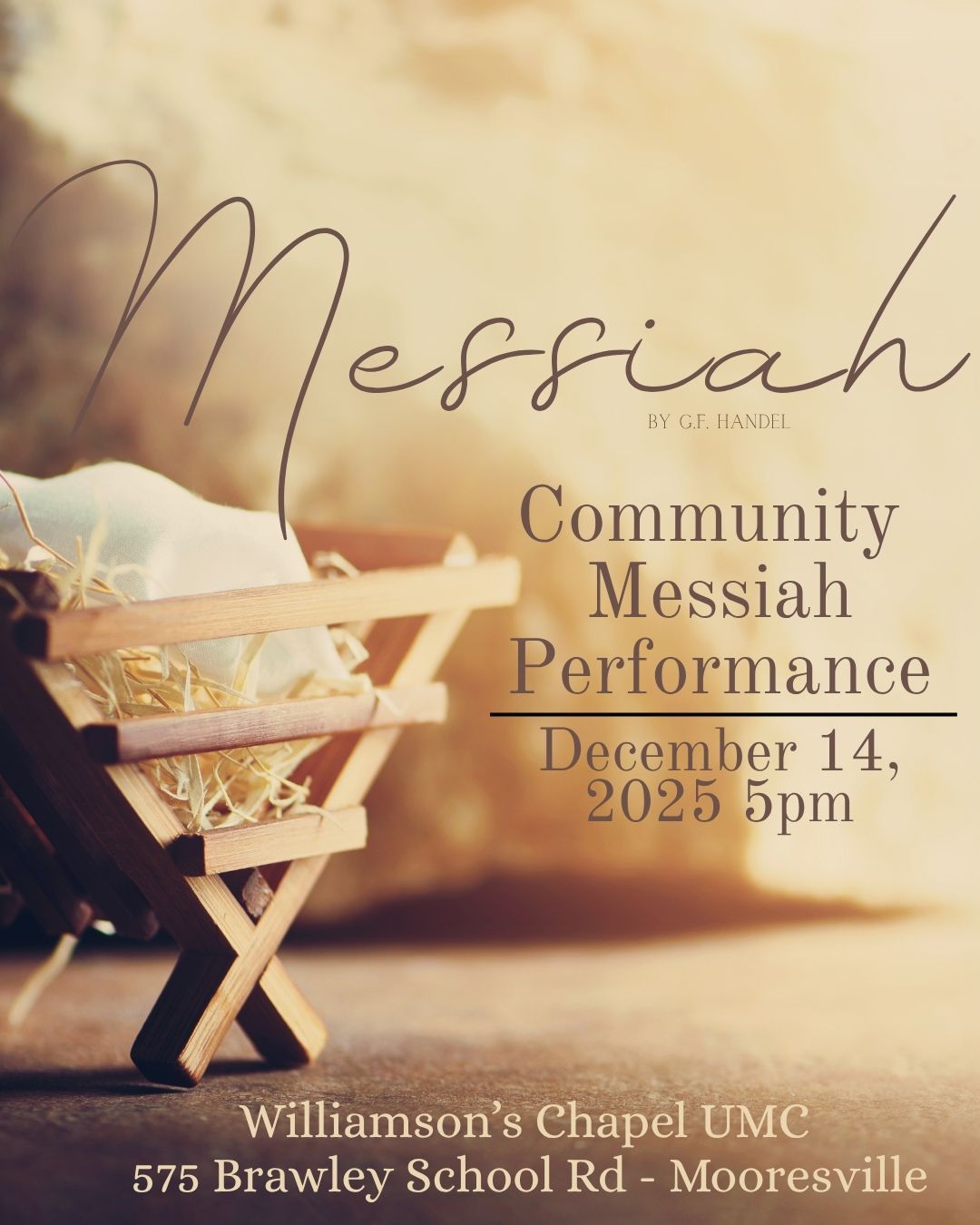
Messiah by G.F Handel
Community Performance
December 14, 2025 5pm
Opening
(COREY) The somber chords of the overture place us in the darkness of the exile away from our roots deprived of our identity with no hope for present or future. But the somber chords introduce no funeral dirge, no march of the dead. Gloom there is but there is stateliness in the gloom, something of a refusal to believe that death is all that awaits. The musical Line moves higher through the dark, moved by the faith that God has not forsaken God’s people, that a future yet lies ahead. As the brilliant fugue opens, the hope shines through, lively with faith, the music works its way into crescendo before the movement resolves itself on chords once more somber. But these closing chords are now informed by a sustaining confidence. It is not despair sounding forth here, but firmness of spirit. Something has been moving in these depths that will issue in a new beginning. Herein is the hope: God will yet act. (Bullard, 6-7)
Overture – Instruments only
Isaiah’s Prophecy
Isaiah 40 (TR)
Comfort, comfort my people, says your God.
Speak tenderly to Jerusalem,
and proclaim to her
that her hard service has been completed,
that her sin has been paid for,
that she has received from the Lord’s hand
double for all her sins.
A voice of one calling:
“In the wilderness prepare
the way for the Lord[a];
make straight in the desert
a highway for our God.[b]
Every valley shall be raised up,
every mountain and hill made low;
the rough ground shall become level,
the rugged places a plain.
And the glory of the Lord will be revealed,
and all people will see it together.
For the mouth of the Lord has spoken.”
(COREY) The soloist cuts through the doom and gloom with a message of hope. He is quoting the words of the prophet in exile but as we listen we hear them merge into the words of John the Baptist announcing the coming of God’s anointed. The Messiah’s coming will bring justice, vindication for the downtrodden. We hear these words in light of the gospel of Luke. “He brought down the powerful from their thrones and lifted up the lowly.” The choir responds with – and the glory of the Lord, meaning the weight of the Lord. The glory of God is a statement pointing to the powerful act of redeeming God’s people from oppression. Here there are words of assurance for ALL God’s people, jew and gentile alike.
Comfort ye my people (tenor)
Ev’ry valley shall be exalted (air for tenor)
And the glory of the Lord (anthem chorus)
The Coming Judgment
Malachi 3: 1-3 (TR)
3 “I will send my messenger, who will prepare the way before me. Then suddenly the Lord you are seeking will come to his temple; the messenger of the covenant, whom you desire, will come,” says the Lord Almighty. 2 But who can endure the day of his coming? Who can stand when he appears? For he will be like a refiner’s fire or a launderer’s soap. 3 He will sit as a refiner and purifier of silver; he will purify the Levites and refine them like gold and silver. Then the Lord will have men who will bring offerings in righteousness,
(COREY)Throughout scripture when God needed to make change in the world a shaking, a quaking happened. The prophet Haggai tells us:
(TR) 6 “This is what the Lord Almighty says: ‘In a little while I will once more shake the heavens and the earth, the sea and the dry land. 7 I will shake all nations, and what is desired by all nations will come, and I will fill this house with glory,’ says the Lord Almighty. 8 ‘The silver is mine and the gold is mine,’ declares the Lord Almighty. 9 ‘The glory of this present house will be greater than the glory of the former house,’ says the Lord Almighty. ‘And in this place I will grant peace,’ declares the Lord Almighty.”
(COREY) God intends to set right the world that has gone astray. God will shake up the world, confronting all humanity. Next we hear from Malachi who once again calls for the God of justice to turn the world upside down. Malachi saw faithlessness in the land as a result of the priests – the Levites. But now this great shaking, this appearance of the Lord of Hosts in his Temple, this restatement of the covenant, this refinement of Israel’s precious substance, will take the form of a renewed priesthood, the purification of the songs of Levi, so that they might once again be fit to bring offerings to the Lord.
Thus saith the Lord (bass)
But who may abide the day of His coming (alto)
And he shall purify (chorus)
The Prophecy of Christ’s Birth
Isaiah 7:14 (TR)
Therefore the Lord himself will give you a sign: The virgin will conceive and give birth to a son, and will call him Immanuel.
Matthew 1: 23 (TR)
“The virgin will conceive and give birth to a son, and they will call him Immanuel” (which means “God with us”).
(COREY) Old Testament prophets were calling for a king – a human king to be a Messiah sent by God. As christians, we look back to the work of God and see how God was foreshadowing through each prophet to a time coming with the reign of Christ, not an earthly king. In this movement we hear both the prophetic words of the prophet Isaiah, speaking of a sign of deliverance from two threatening kings, AND from the Gospel of Matthew calling for the deliverance from sin. This is why Mary’s child would be named Jesus meaning “the Lord saves”. We have just heard the chorus mightily announce the promise of renewed and purified access to God. Now music becomes quiet, as the alto virtually whispers to us the promise of the prophet. The musical identity is highly appropriate, for like the resurrection of the dead, the virgin birth is a mystery, Not a riddle or puzzle for which we can find some explanation or solution, but a mystery, before which we can only come in the kind of awe, communicated by the alto’s soft assurance that in this mystery. God IS with us. (Bullard, 26-27). The people respond, affirming the words of the prophet, singing for joy of Zion shining in the light of the risen glory.
Behold, a virgin shall conceive (alto)
O thou that tellest good tidings to Zion (air for alto and chorus)
The Prospect of Deliverance
Isaiah 60: 2-3 (TR)
See, darkness covers the earth
and thick darkness is over the peoples,
but the Lord rises upon you
and his glory appears over you.
Nations will come to your light,
and kings to the brightness of your dawn.
Matthew 4: 15-16 (TR)
“Land of Zebulun and land of Naphtali,
the Way of the Sea, beyond the Jordan,
Galilee of the Gentiles—
the people living in darkness
have seen a great light;
on those living in the land of the shadow of death
a light has dawned.”
(COREY) The bass begins describing the world prior to the true light, the Messiah. It is in darkness. All the peoples of the world are enshrouded in it’s folds. BUT the Lord shall rise upon you! People do live, groping and curing in a darkness of their own choosing. But Isaiah’s God will not leave them in darkness. God is intent on coming upon them with light. The music is dark, slow, and heavy. A darkness that can be felt like the darkness that came over Egypt on the night of the death of the firstborn. But as the light begins to dawn the music rises and become expansive, conveying the light that has risen upon Zion to shine upon the world, the light of the Messiah that shines in the darkness, and which the darkness has never extinguished. (Bullard, 33-34)
For behold, darkness shall cover the earth (bass)
The people that walked in darkness (bass)
For unto us a child is born (chorus)
The Annunciation to the Shepherds
(COREY) Prior to the proclamation of the birth we must prepare for the announcement. We must remove ourselves from the jubilation of hearing the prophetic word and settle down on the quiet hillsides around the village of Bethlehem. We must prepare our hearts for the great coming. We must humble ourselves with the shepherds. The Pastoral Symphony, the only instrumental interlude in the work does this for us. The music is calm, and cool, and sweetly lyrical. It breathes the quietness we must experience before the great announcement.
Luke 2: 8-11, 13-14 (TR)
8 And there were shepherds living out in the fields nearby, keeping watch over their flocks at night. 9 An angel of the Lord appeared to them, and the glory of the Lord shone around them, and they were terrified. 10 But the angel said to them, “Do not be afraid. I bring you good news that will cause great joy for all the people. 11 Today in the town of David a Savior has been born to you; he is the Messiah, the Lord. 13 Suddenly a great company of the heavenly host appeared with the angel, praising God and saying, “Glory to God in the highest heaven, and on earth peace to those on whom his favor rests.”
(COREY) The one born today is indeed the Messiah – the Christ – the first time the word has been used in the oratorio. And HE IS the Lord. As the apostle looked for the day when mortal tones would confess Jesus as Lord, we now hear the tones of angels praising God. Accompanied by only a few chords, the soprano quietly begins telling the story, a soaring line arching across the night sky. But now the music shimmers and rustles with the dazzling light of God’s glory and whirring wings of angels, as we hear of the appearance of the angel and the spheres fear. In Rejoice greatly the prophet tells of the coming of the messianic King. He calls on Jerusalem to break out into singing because her king is on the way. Messiah has come, but an unexpected Messiah, one we may not be as willing to accept. He has not come to overthrow our political enemies. He comes to accept suffering out our behalf, that is how he will win his cause and gain his victory. He is the righteous savior.
Pifa (“pastoral symphony”: instrumental)
There were shepherds abiding in the fields (soprano)
And lo, the angel of the Lord came upon them (soprano)
And the angel said unto them (soprano)
And suddenly there was with the angel (soprano)
Glory to God (chorus)
Christ’s Healing and Redemption
Isaiah 35: 5-6 (WES)
Then will the eyes of the blind be opened
and the ears of the deaf unstopped.
Then will the lame leap like a deer,
and the mute tongue shout for joy.
Water will gush forth in the wilderness
and streams in the desert.
Matthew 11: 28-29 (TR)
“Come to me, all you who are weary and burdened, and I will give you rest. Take my yoke upon you and learn from me, for I am gentle and humble in heart, and you will find rest for your souls.
(COREY) Redemption is being proclaimed: sight to the blind and hearing to the deaf. Israel received a new call to her mission as the people of God. These words are used in the oratorio to tell of the ministry of Jesus, how he gave sight to the blind and heading to the deaf and made the lame walk. We are reminded too that we are his people and the sheep of his pasture. It is a continuation of the way the oratorio began – come for ye my people. We hear back to Jesus who called himself the Good shepherd. The shepherd who lays down his life for the sheep. Salvation is come and is evident through a savior who guides his people in love.
Rejoice greatly, O daughter of Zion (soprano)
Then shall the eyes of the blind (soprano)
He shall feed his flock (alto/soprano)
Finale
(COREY) The most well known piece of this work is the hallelujah chorus. Generation after generation have performed this movement to give glory to God. And although the hallelujah chorus lies at the end of the 2nd part of the entire oratorio we are going to perform it tonight – giving praise and thanksgiving to a God who comes in the form of his babe in a manger. Not lightly, or carelessly but with the weight of the entire world on his shoulder. He comes to proclaim good news to the poor. to proclaim freedom for the prisoners and recovery of sight for the blind, to set the oppressed free, to proclaim the year of the Lord’s favor.” He comes bringing light into this very dark world. We can’t exclaim any better than to join the angels singing hallelujah over and over again.
Hallelujah Chorus




 stained glass... and drums